So, here is another TED (Technology, Entertainment, Design) Talk video. This one is by Michael Shermer, founder/publisher of Skeptic Magazine, and author of several books, including Why People Believe Weird Things. It was recorded in February 2006 and last around 18 minutes.
Showing posts with label TED Talks. Show all posts
Showing posts with label TED Talks. Show all posts
Saturday, December 09, 2006
TED Talks: Twists of the Mind
I know I wrote that the next few posts would be about cultural differences between France and Hong Kong, but as a good French person I only define rules so that I can have the pleasure to break them… ;o)


Tuesday, November 14, 2006
Is More Choice A Good Thing?
 Here is another great video taken from TED (Technology Entertainment Design) Talks. This one was made by Barry Schwartz in July 2005 following the release of his book "The Paradox Of Choice" (duration: 20 minutes).
Please go check the Malcolm Gladwell video I posted earlier if you did not watch it.
In this talk, Barry Schwartz builds a very strong argument against providing too much choice to people. He highlights that in regards to choice, although too little is bad, too much can as well have a very negative effect on people on four different aspects:
- Regret and anticipated regret
- Opportunity cost
- Escalation of expectations
- Self-blame
If we look at clothing shops in Hong Kong for example, instead of having a simple Giordano, now you have Giordano, Giordano Ladies, Giordano Junior, Giordano Concepts. With every new type of store created, customers' expectations of how well a specific store can address their needs will increase, thus making it much more difficult to exceed these customers' expectations. Few choices answering specific needs and clear distinctions between each choice, rather than choice overload, is a winning formula.
Wednesday, October 25, 2006
Customer Experience is about Individuals!
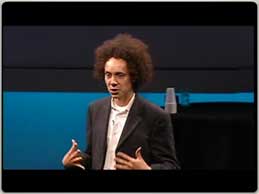 There is a great speech from Malcom Gladwell, the author of bestsellers "Blink" and "The Tipping Point", that I think explains very well the need to consider customers as individuals. It thus complements nicely the concept that customer experience is about individuals as I highlighted in my last post on What is Customer Experience. It also highlights the need to use innovative techniques when researching customers to uncover needs that cannot be identified by direct questioning.
 His talk on “what every business can learn from spaghetti sauce” was made during the TED (Technology, Entertainment and Design) 2004 event in
When watching this, we can wonder how ready the organizations we are working in or we are interacting with are to identify, understand and leverage differences among customers.
Subscribe to:
Posts (Atom)