Showing posts with label Innovation. Show all posts

Saturday, December 23, 2006

"Better Living - Product Design Contributes" Expo


The Hong Kong heritage museum has organized a 6 months or so product design exhibition as part of the government initiative to promote Hong Kong as a design platform for Asia. All the exhibitors are Hong Kong designers or companies (See Pictures on Flickr).

It is interesting to see that most well-known Hong Kong designers have set up their own consultancy or design their own products on a small scale and in relatively low risk categories. Indeed the exhibition has a lot of "gift & Premium" types of products.

Still, the TTI Group area is very interesting, with a wide range of products displayed and much efforts spent on highlighting the design process behind each of these. To me, that should be the spirit of the whole exhibition and is the best way to promote design and push people to get more involved.

I was very disappointed at the Philips Design booth. Nothing much to see there. It seems they tried to build an "experience" booth with too much atmosphere and very little content.

Friday, December 22, 2006

Interactive Floors

There are more and more interactive floors appearing all over town in Hong Kong. These things even though they do not work perfectly are a great way to entertain people and make them interact with their surroundings. And kids especially love it...

Few Links - 22 Dec. 2006

The usual three links on three topics that have nothing to do with one another:

  1. From BusinessWeek is an article about "China's Innovation Barriers". My thought on this: Looking at China's rapid evolution in the past decades, why would being innovative be much of a problem? China has overcome much larger problems already.
  2. From BusinessWeek again is an article about "Matsushita's Green Strategy". A lot of interesting figures about Japanese companies in this article. The biggest take-away is that being greener is really a huge commitment and investment that does not bring return right away, so companies had better start quick.
  3. Posted on Experientia Blog "Putting People First" is an article about Usability called "Introducing Usability 2.0". I really hate that 2.0 craze, but having done Usability Testing and writing reports sometimes even after a Web site had been launched, I totally identify with the writer. Great read.

Thursday, November 16, 2006

Few links - 16 Sept. 2006

  1. The onliness of Strong Brands is a BusinessWeek article about ZAG, a new book from Marty Neumeier. The book talks about the "onliness" of brands, meaning their uniqueness. It emphasize the need to create unique experiences as opposed to best experiences, arguing that best experiences leads to following common practices and fail to differentiate the brand. The article also emphasizes the need to link brands with long-term trends to create a bridge with customers, as well as be critical towards results from market research that sometimes fail to identify a killer product.

  2. (Links in French) WAT.TV is an online platform launch by French TF1 (The channel number 1 in France). In LeMonde, leading French newspaper, the article entitled "TF1 fait de la television avec du Web" (TF1 does TV using the Internet) discusses the new strategy employed by the channel to bridge traditional TV programming with the Web. The online platform allows the community to share pictures, videos, text and so on. On a weekly basis, the channel will choose a selection of short videos that they will broadcast late at night on their main channel. The authors of the videos receive Euro 100 for that. I find the approach pretty nice, but I wonder if a significant community can really emerge around a TV channel... it seems too restrictive to me.

  3. The last link is to the SonyEricsson ad that is showing right now on Hong Kong TV. The ad is very neat and nicely done... but at the end the phone rings and a guy says: "Hello...". Am I the only one who wants to complete the sentence with "Moto"? Every time I see the ad I think about Motorola more than SonyEricsson...

Saturday, November 11, 2006

RSS for Everyone?

RSS feeds changed my life. They are the best way to retrieve information on a daily basis from multiple sources of information. Everybody knows that I guess... or do they?

Even though RSS feeds have been around for a long time, their potential has not been fully utilized today. One of the reason for this is that whatever easy we believe, as heavy Internet users, it is to use RSS or to understand the logic behind, well it is not. I was transferring all my feeds this afternoon from MyYahoo to NetVibes, as I think NetVibes offers more flexibility for me to build my own "stay-in-touch-with-the-World" page. It took me hell of a lot of time... adding all the feeds and very often having to copy/paste RSS feeds URLs. And I am not even talking about finding new feeds here.

Talking about my dad again...
I am sorry that I will mention my dad again. Not that I have a fixation on him, but while he was visiting Hong Kong I gave him am Internet crash course! I decided to show him the power of the Internet and how it could change his way of working. Some stuff freaked him out, like being able to find pictures of the house he just bought in a tiny village in the South-East of France on Flickr. Others amazed him like the amount of information that can be found on Wikipedia. But above all, he felt most enthusiastic about RSS feeds and how it could help him save so much time... save time, that is once you have everything set up.

All this takes so much time
And that's where for me the major problem is. To be able to make an efficient use of RSS feeds, well on top of being very comfortable with all that Internet stuff, you have to have so much time. There is so much information out there that finding really interesting content is really a challenge, especially for the generation of people who did not grow up browsing the Web before they could speak. And this segment of the population is in dire need for information, as they hold position of major responsibility in multinationals for example.

Bloomberg for everybody
So, if we look at how things work in the Financial world, where Bloomberg and others feed real-time information to traders around the World. Wouldn't a concept like that nowadays work with general information where users could choose to be informed about special topics of interest? As many Web sites do it, it is great to leave it to the community to decide what is interesting, but for people with little Internet experience and little time, the task of choosing the type of content that is interesting to them could be left to one or several experts.

Following Pandora concept
A Web site that has nothing to do with information but that I find so great is Pandora, where the system builds a radio suited to your own taste, just based on the name of a band or a song that you provide. When a song comes up, you can just say that you like it or not and the system will tailor further the radio. It is that kind of simplicity that could make to my mind RSS feeds and information providers reach their full potential. Of course Pandora is a huge initiative that necessitates to review and categorize every piece of music that can be found. Could that be done with information? My feeling is that leaving an algorithm and the whole community do it may not be enough... and may leave out a part of the population who would be avid users is they were given the opportunity to try.

Wednesday, November 01, 2006

Blurring the line between real and virtual

A pretty interesting article today in BusinessWeek Online Innovation section entitled: "Second Life Lessons". It explains the threats and opportunities of advertising campaigns or even setting up shops in virtual worlds like Second Life. As a gamer I really do not believe in in-game advertising. They are intrusive and if not their effectiveness still has to be proved.

The example of Toyota, which plans to build its own shop in Second Life selling customizable virtual cars is another kind of interactions between companies and customers, which to me offers much more appeal. If Toyota is creating great virtual cars that blend totally in the virtual world, it may very well have crucial impacts on its brand in the real world. But it is also a risky path... as the article points out, virtual communities are not easy to crack and blend into (The example of avatars bombing virtual stores is pretty scary). Second life also offers limited opportunities in terms of exposure due to the volume of its traffic... at the time I write this post, only 6,250 people are online.

Tuesday, October 31, 2006

Ethnographic Research at Intel

Linked from Experientia blog Putting People First is an article on how innovation is done at Intel these days "Making computing a people science". The article especially focuses on how Intel team of social scientists help to spur innovation that truly addresses customer needs.

Nothing really revolutionary in the model that is introduced in the article. It is basically a SET (Social, Economic, Technological) model, used to make sure design is considered from every point of view:
  • Social: Does the design address a need of customers or could create one?
  • Economic: Is the design viable financially?
  • Technological: Is the technology available to bring the design to reality?
But it is interesting to see that ethnographic research is applied, at it should, to any industry. The IT and software industries formerly based their processes on very strict sequential models and should definitely wake up to the call and get into their users' lives much more.

Thursday, October 19, 2006

Speech-to-speech Translation

In news dated October 12th, 2006 IBM announced that the US Army will use its new speech-to-speech translation software in Iraq to support troops on the ground. The difference with this speech recognition software is that it can process and translate free speech instead of predefined sentences.

This opens up great opportunities, and could change the way people communicate if the technology is really proven to be efficient. The software is also available to translate between English and Mandarin... not a bad idea with the Olympic games coming up. IBM has a
demo video of this on its Web site.

It would be interesting to see the system in real and play with it. The demo only includes very simple sentences that I guess any recognition software could process. Pretty exciting anyway to see that finally this type of software is commercially viable... at least for the US Army.

Wednesday, October 11, 2006

Riding the YouTube Wave

Google has acquired YouTube for USD 1.65 billion. Not bad a price for buying an online video sharing platform that has no business model whatsoever. Anyway, it will be interesting to see how Google can turn this to its advantage. Here are some related articles from BusinessWeek Online: This morning chatting with a friend we thought that combining the power of YouTube and the China market could only work. We started our venture... our quest to develop the winning online video sharing Web site in China.

For now... we have a logo:
;o)

What else do we need?
- A Web site
- An audience (10,000,000 should do it)
- Wait for the Chinese government to allow free flow of information
- A business plan (an empty blank page should do it)
- Strong marketing (with that logo, half is done)

YouTube Beware...

Thursday, October 05, 2006

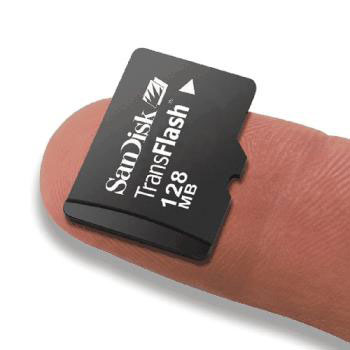
Where did I put my memory card?

Nowadays, smaller is better, but does small become TOO small at some point?

The newest memory cards, called microSD, are barely the size of your fingertip and can hold roughly as much memory as its older brother, the miniSD. Now, that’s technological innovation for sure. It is really impressive to see the progress that is made in memory storage devices these days. Progress that is necessary when we see the diet mobile phones, mp3 players and other portable devices are going through right now. It is the race to know who will be the thinnest. One day it is Motorola and then Samsung fights back. Who’s next? We may wonder when the first association against mobile phone anorexia will be created…

To be frank, when my friend pulled out her Samsung X828 out of her jean back pocket the other day, I was stunned. Thinner really looks cooler! If we can have less bulky and lighter phones we are happier right?

Nevertheless when I see microSD cards I cannot help but wonder if these guys did not go a bit too far. I mean, how do you handle such a small piece of hardware? How many people will inadvertently drop their memory card in their coffee cup or lose them somewhere around the house? Memory cards are meant to be moved from one device to another. In such situation, small may at some point become TOO small.

The product feels and looks cool, but usage is what matters in the end. The early buzz may change into frustration when consumers are faced with difficulties actually handling the thing… just wondering.